
Turn observation into focused alerts.
Seagull operates on existing fixed camera networks, continuously analyzing visual activity and matching it against predefined conditions.
Define Operational Intent
Oversight begins with clear intent. Operators define the conditions that require attention within their environment. These conditions may relate to:
- Vessel type or characteristics
- Entry into defined zones
- Movement direction or behavior
- Time-based rules
- Combinations of observable criteria
Conditions are expressed in operational terms and can be adjusted as responsibilities evolve.

Continuous Visual Analysis
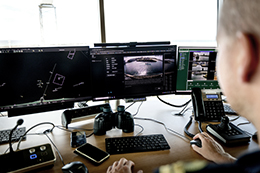
Seagull connects to fixed camera infrastructure and continuously processes live video streams.
The system identifies and classifies observable activity across the monitored area, ensuring that relevant developments are analyzed in real time.
Observation is constant, human attention is not.

Condition Matching
Observed activity is continuously compared against the defined conditions.
When a match occurs, the system generates an alert that includes:
- Visual reference
- Location context
- Description of the triggering condition
Alerts are triggered by defined intent, not by generalized anomaly detection.

Recognition and Historical Context
Seagull retains relevant visual characteristics of vessels and activity for a defined period.
This enables:
- Recognition of recurring vessels
- Comparison with recent observations
- Continuity in oversight
Context supports proportionate response.

Human Review and Action
All alerts are reviewed and acted upon by operators.
The system does not initiate enforcement or intervention. It provides structured information to support informed decisions. Human authority remains central.
Request a conversation.
To discuss how Seagull can support oversight in your environment, contact our team for a confidential introduction.